
MB-102 830-Point Solderless Breadboard with Retail Packaging


Roll over image to zoom in
৳ 80.00৳ 100.00 (-20%)
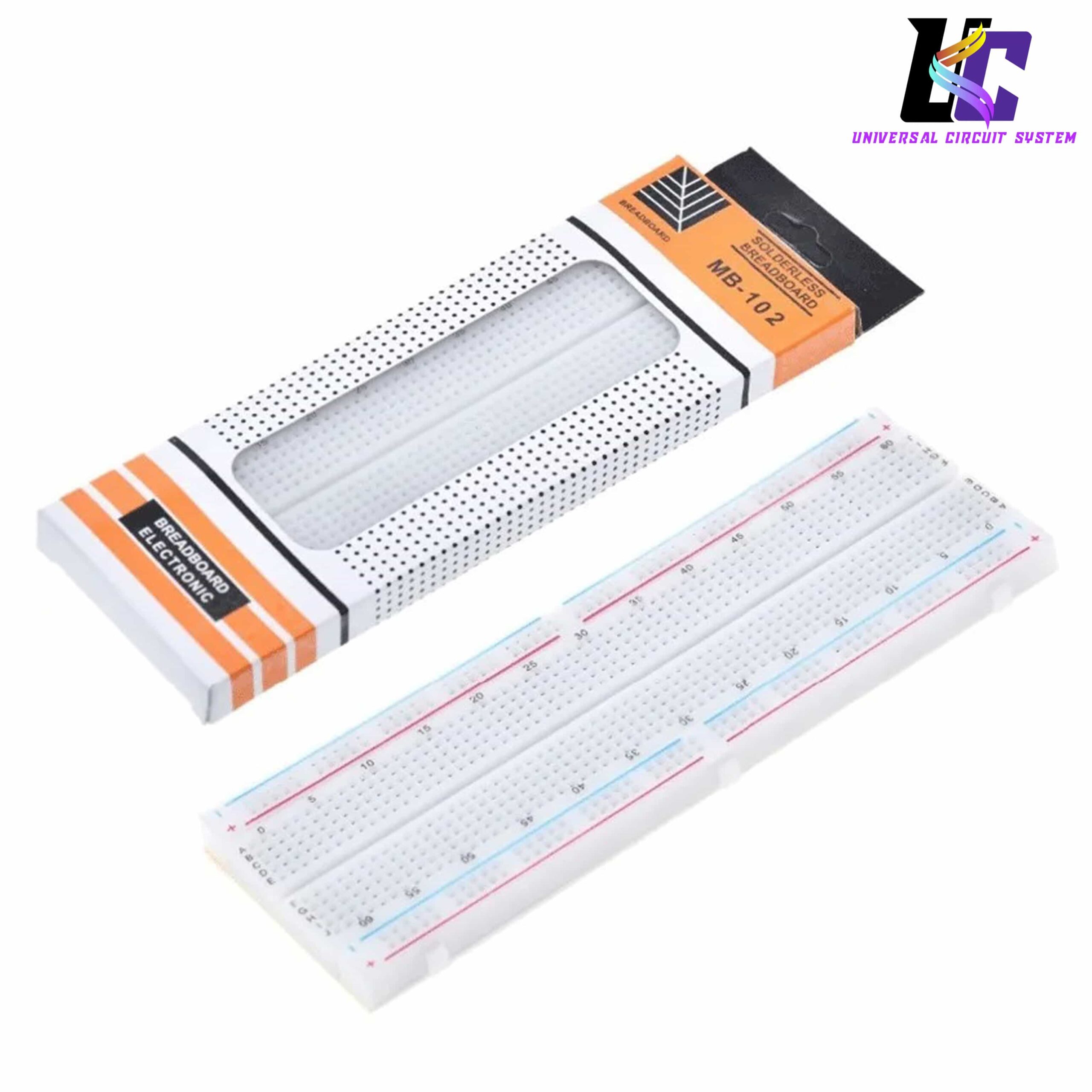
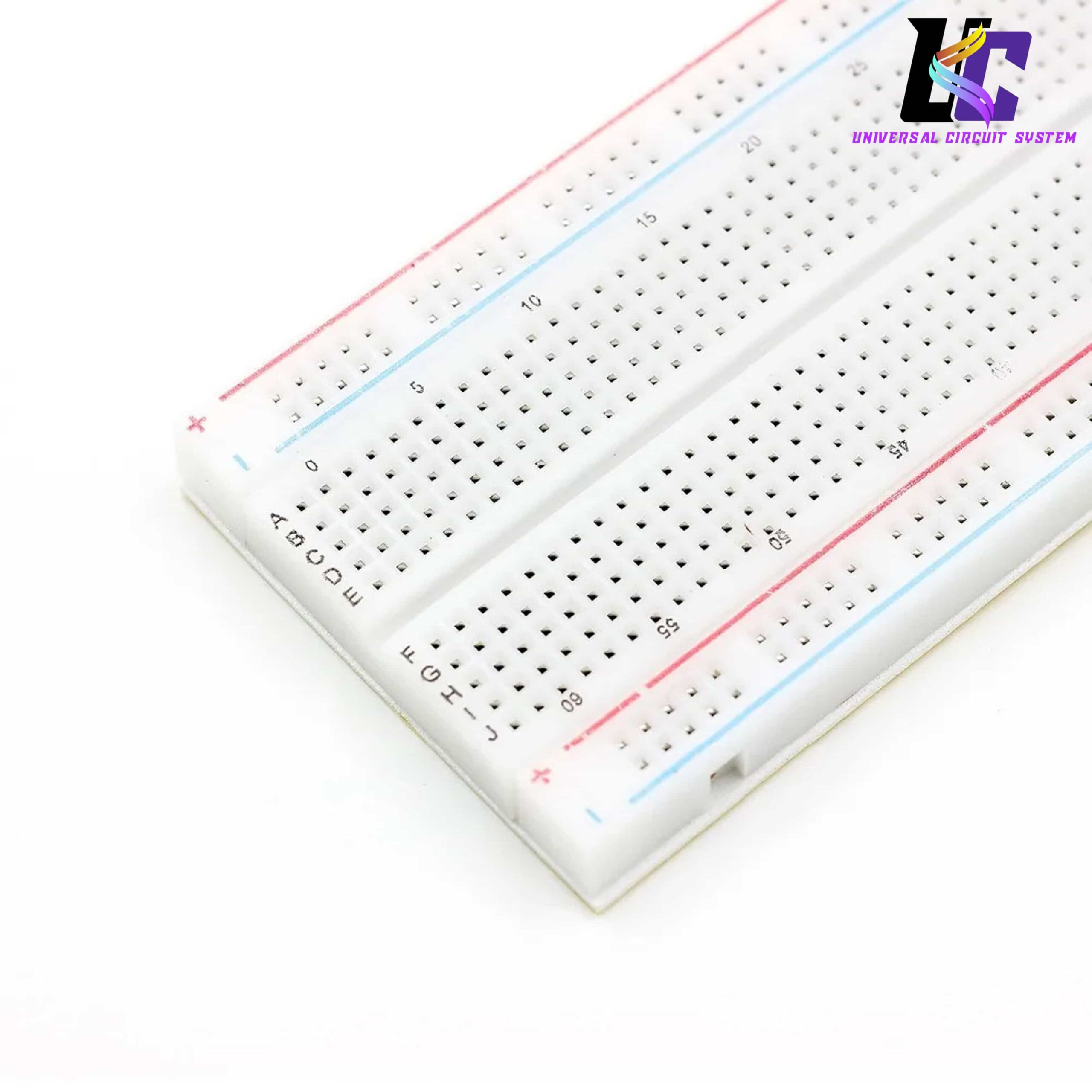
This is a standard MB-102 830-point solderless breadboard designed for quick, solder-free electronic prototyping and circuit testing [Image Context]. It features 630 tie-points in the main terminal matrix alongside 200 tie-points across four independent power bus rails, complete with clear color-coded indicators (+/-) and an alphanumeric grid [Image Context]. Built with internal nickel-plated phosphor bronze spring clips and modular interlocking side tabs, this breadboard seamlessly pairs with Arduino, Raspberry Pi, and standard DIP integrated circuits
Product Overview
The MB-102 830 Tie-Point Solderless Breadboard is the industry-standard foundation for electronic prototyping, hardware circuit layout, and education [Image Context]. This full-sized breadboard enables engineers, students, and makers to construct, test, and modify temporary circuits cleanly without using soldering irons [Image Context]. It provides an excellent plug-and-play interface for testing microcontrollers, discrete semiconductors, analog sensor arrays, and basic passives.
Design & Structural Features
- Clear Alphanumeric Grid Mapping: The primary construction columns are marked with red and blue numeric scales (ranging from 1 to 63) along the top and bottom borders [Image Context]. They are paired with vertical row coordinates labeled A through J to help trace circuits and match pin connections against schematic diagrams.
- Color-Coded Power Bus Distribution: Equipped with dual, continuous outer distribution strips running parallel along both long edges [Image Context]. Each column features a distinct Red Line (+) and Blue Line (-) indicator to streamline power and ground distribution across your entire project [Image Context].
- Modular Interlocking Side Tabs: The outer ABS plastic walls are molded with integrated interlocking dovetail tabs and slot tracks. This clever design allows you to snap multiple breadboards together seamlessly to build massive, multi-staged prototyping benches.
- Secure Peel-and-Stick Adhesive Tape: The underside comes with a pre-applied layer of heavy-duty double-sided foam tape. Simply peel the backing sheet away to securely stick the breadboard down onto aluminum workstation plates, acrylic smart-car chassis, or wooden project boxes.
Technical Specifications
| Structural Component | Verified Specification Value |
|---|---|
| Model Classification | MB-102 Standard Series / Full-Size Prototyping Platform [Image Context] |
| Total Tie-Point Count | 830 Points (630 Main Matrix + 200 Power Rail Points) [Image Context] |
| Internal Spring Material | High-elasticity, nickel-plated phosphor bronze alloy clips |
| Compatible Wire Scope | Accepts standard solid hookup wire ranging from 21 to 26 AWG |
| Component Pin Fitment | Tailored for all standard DIP integrated circuits, headers, and transistors |
| Outer Chassis Shell | High-impact, flame-retardant ABS White Plastic housing [Image Context] |
| Physical Dimensions | Approximately 16.5 cm x 5.5 cm x 0.85 cm |
Internal Connection Geometry
Understanding the hidden copper matrix inside the board simplifies connection planning:
- The Main Working Grid: The 630 internal tie-points are divided into two blocks separated by a central 0.3-inch isolation trench (the DIP rail) [Image Context]. Each vertical column of five holes (e.g., A-B-C-D-E) is connected internally by a single five-point spring clip.
- The DIP Integration Rail: The central groove is specifically engineered to straddle standard Dual In-line Package (DIP) chips, keeping the pins on the left side electrically isolated from the pins on the right.
- The Power Rails: The 200 power bus points are split into 4 independent horizontal rows of 25 holes [Image Context]. They run continuously from left to right to serve as convenient power and ground hubs across the board.
Common System Deployments
- Microcontroller Prototyping: Bridging input and output pins from Arduino Uno, Nano, ESP32, and Raspberry Pi Pico development boards into external circuits.
- Analog Circuit Design: Testing and tuning complex discrete circuits involving operational amplifiers, 555 timers, logic gates, and transistor drivers.
- Educational Training Labs: Serving as an essential hands-on training board in physics labs, robotics clubs, and entry-level electrical engineering courses.





Reviews
There are no reviews yet.