
ESP32-S3 N8R2 Dual Type-C Development Board ESP32-S3-DevKitC-1 8MB Flash 2MB PSRAM WiFi BT Module

Roll over image to zoom in
৳ 1,050.00৳ 1,100.00 (-5%)
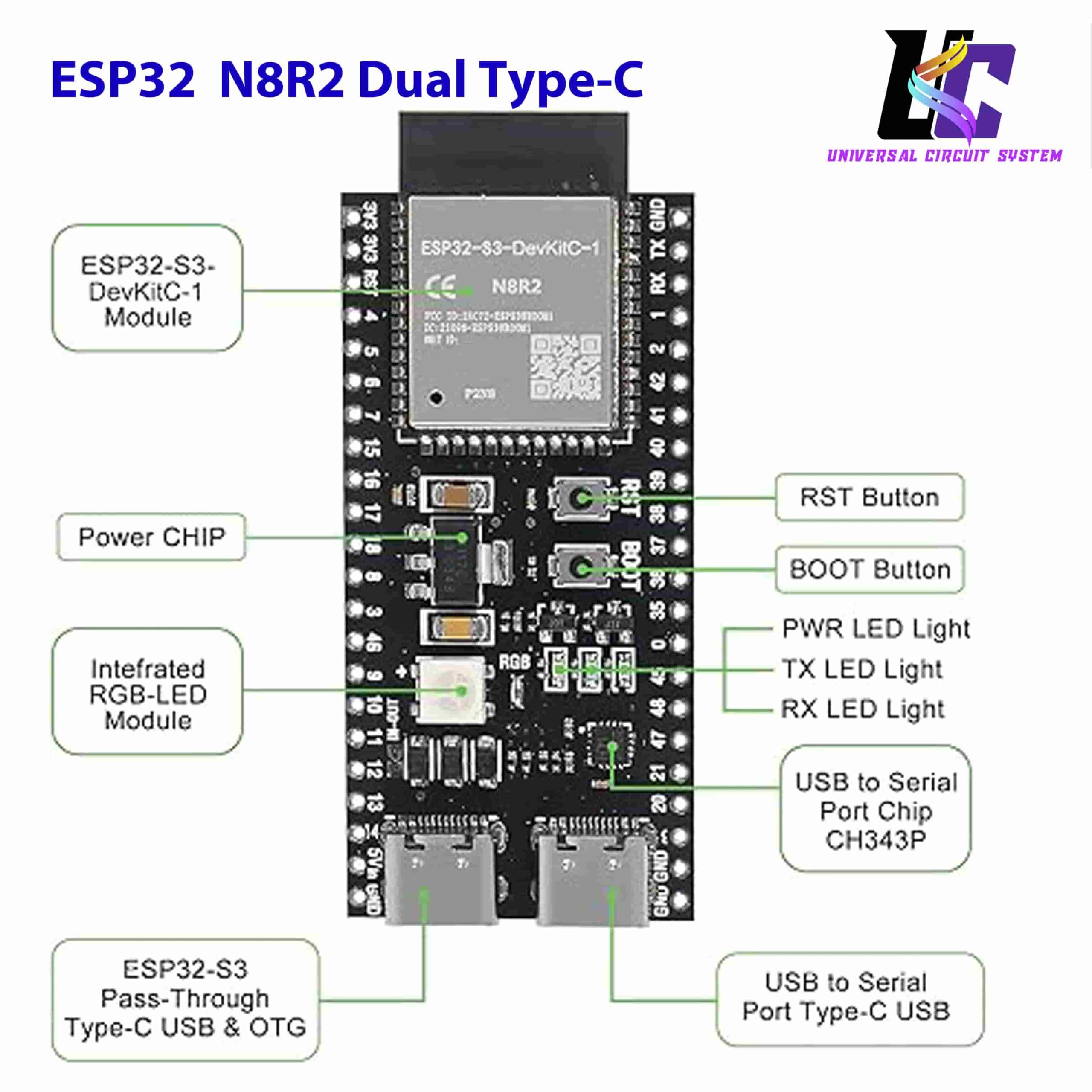
This high-performance ESP32-S3 N8R2 development board (ESP32-S3-DevKitC-1 architecture) features an advanced Xtensa® 32-bit LX7 dual-core processor [240MHz] optimized for budget-conscious AIoT applications. It integrates a balanced memory configuration combining 8MB of Flash memory (N8) with 2MB of external PSRAM (R2) to run rich, responsive applications. Offering reliable 2.4GHz WiFi and Bluetooth 5 (LE) wireless streams, the board features a dual Type-C USB interface network that separates native USB-OTG peripheral hosting from the dedicated serial UART debugging port. Complete with dense breakout pins, tactile Boot/Reset buttons, and a built-in programmable RGB LED indicator, it serves as the ultimate cost-effective micro-computing hub for custom home automation grids, wireless sensors, and DIY IoT projects.
If you want, tell me if you need help with:
- Writing a comprehensive, full product description
- Formatting bullet points optimized for e-commerce sites like Amazon or AliExpress
- Listing the exact GPIO pins wired to the onboard RGB LED and physical switches
Product Description
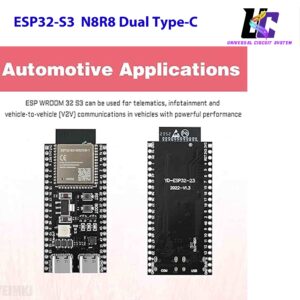
The ESP32-S3 N8R2 Dual Type-C Development Board is a high-performance, cost-effective microcontroller platform based on the standard ESP32-S3-DevKitC-1 hardware architecture. Powered by an Xtensa® 32-bit LX7 dual-core processor running at up to 240MHz, this robust board features built-in vector instructions to accelerate neural network computing and artificial intelligence (AIoT) workloads at the edge. This versatile memory variant combines 8MB of high-speed SPI Flash memory (N8) with 2MB of external PSRAM (R2), offering an optimized balance of expansive firmware storage and active runtime memory memory for intermediate web apps, multi-sensor tracking, and streaming data logs.
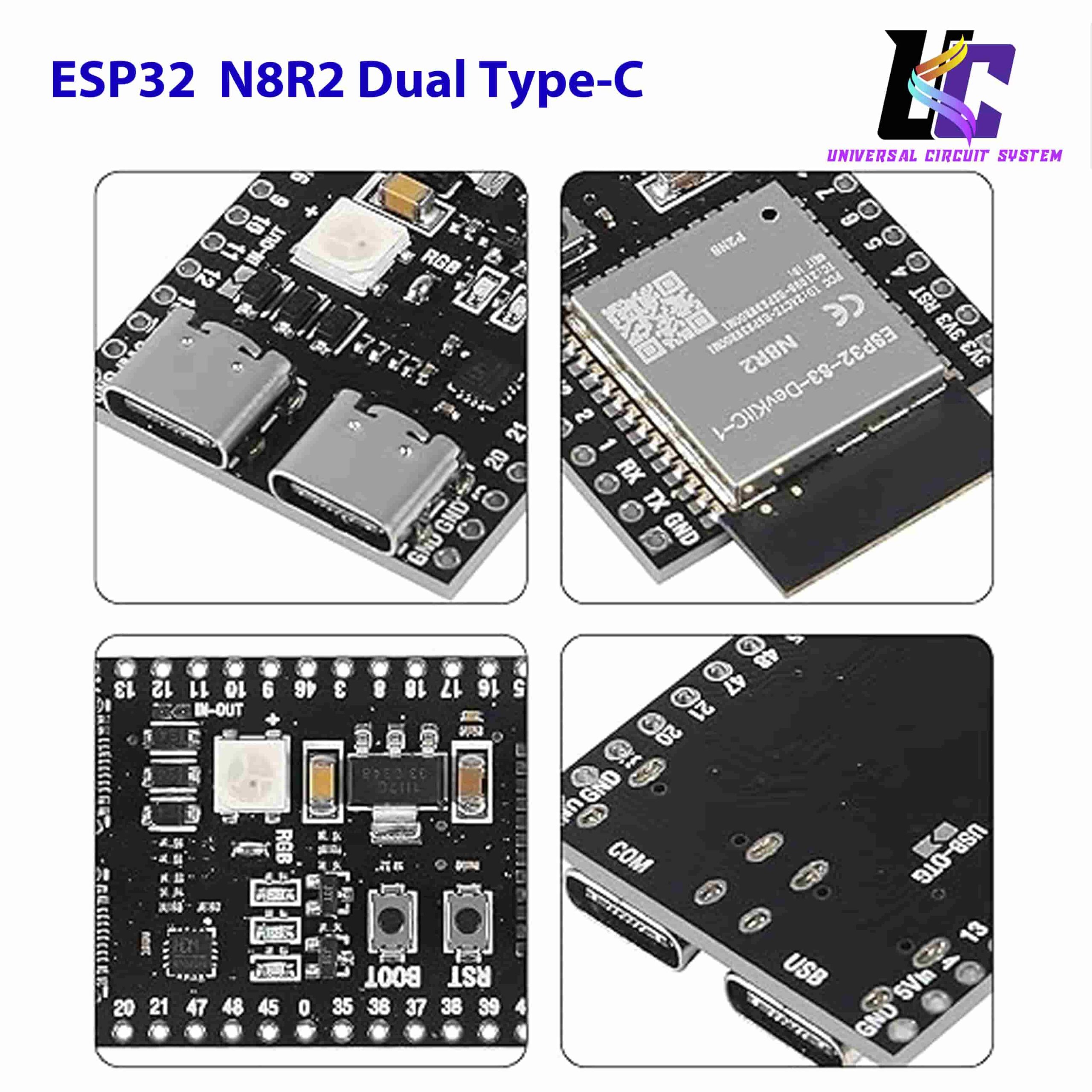
A standout hardware feature of this development board is its dual Type-C USB interface network. This dual-port topology isolates native USB-OTG (On-The-Go) peripheral communication from the dedicated UART serial communication line, enabling creators to host external peripherals while simultaneously debugging and flashing firmware. Equipped with robust 2.4GHz Wi-Fi (802.11 b/g/n) and Bluetooth 5 Low Energy (LE) wireless capabilities, the module includes an integrated PCB trace antenna, tactile physical Boot and Reset switches, and a programmable onboard addressable RGB status LED. Its dual-sided, breadboard-friendly pin layout provides seamless access to a rich array of peripherals, making it the ideal computing hub for smart home automation, custom wireless nodes, robotics controller arrays, and DIY internet-connected electronics.
Key Features
- Dual-Core AI Processing Core: Driven by an Xtensa 32-bit LX7 dual-core CPU with specialized hardware-level vector instructions for efficient machine learning workloads.
- Balanced N8R2 Memory Array: Integrates 8MB of onboard SPI Flash alongside 2MB of external PSRAM to execute rich applications at an accessible price point.
- Dual Type-C USB Interface: Dual-port layout separates native USB-OTG peripheral hosting from the dedicated serial UART debugging port for streamlined development.
- Robust Wireless Communications: Built-in 2.4GHz Wi-Fi and Bluetooth 5 (LE) backed by an integrated copper trace antenna provide stable long-range wireless links.
- Breadboard-Friendly Prototyping: Dense dual-sided male pin breakout spacing allows the module to slot directly into standard prototyping breadboards and custom expansion shields.
Technical Specifications
- Core Microprocessor: Espressif Systems ESP32-S3 WROOM Series (ESP32-S3-DevKitC-1 Base)
- Clock Frequency Profile: Up to 240 MHz
- Memory Capacity: 8MB Flash (N8) / 2MB PSRAM (R2)
- Wireless Standards: Wi-Fi 2.4GHz (802.11 b/g/n) + Bluetooth 5.0 Low Energy (LE)
- Onboard Interfaces: 2x USB Type-C Receptacles, 1x Programmable WS2812 RGB LED, 1x Reset Button, 1x Boot Button
- Pin Configuration Layout: Dual-sided male headers with clearly marked silk-screen pinout codes
If you want, tell me if you need help with:
- Formatting an SEO-optimized bulleted list for Amazon, eBay, or AliExpress storefronts
- Creating a guide on how to configure the board within the Arduino IDE or MicroPython environment
- Listing the exact GPIO pin allocations for the onboard components (RGB LED, switches, etc.)






Reviews
There are no reviews yet.