
TTP223 Capacitive Touch Sensor Module

Roll over image to zoom in
৳ 15.00৳ 40.00 (-63%)
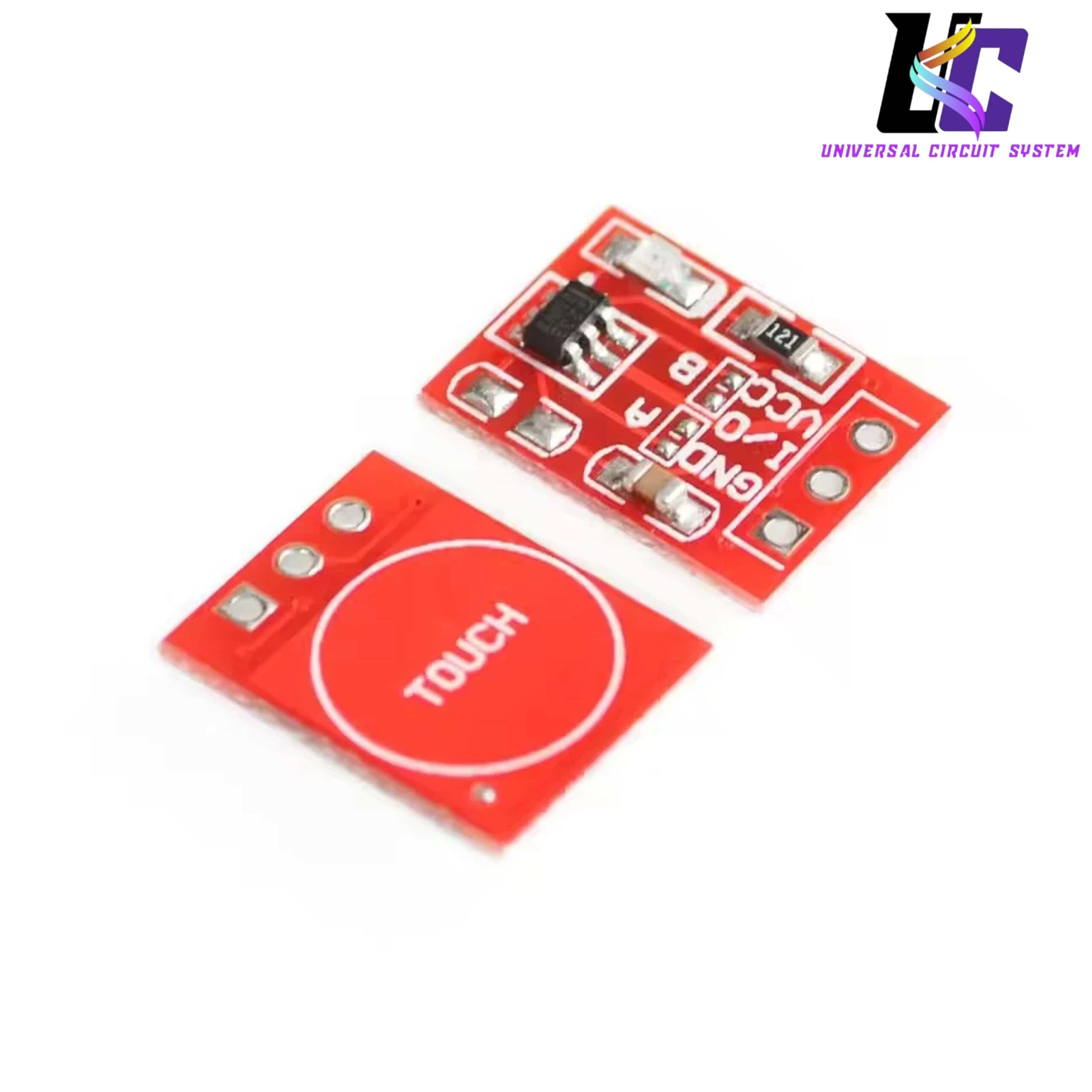
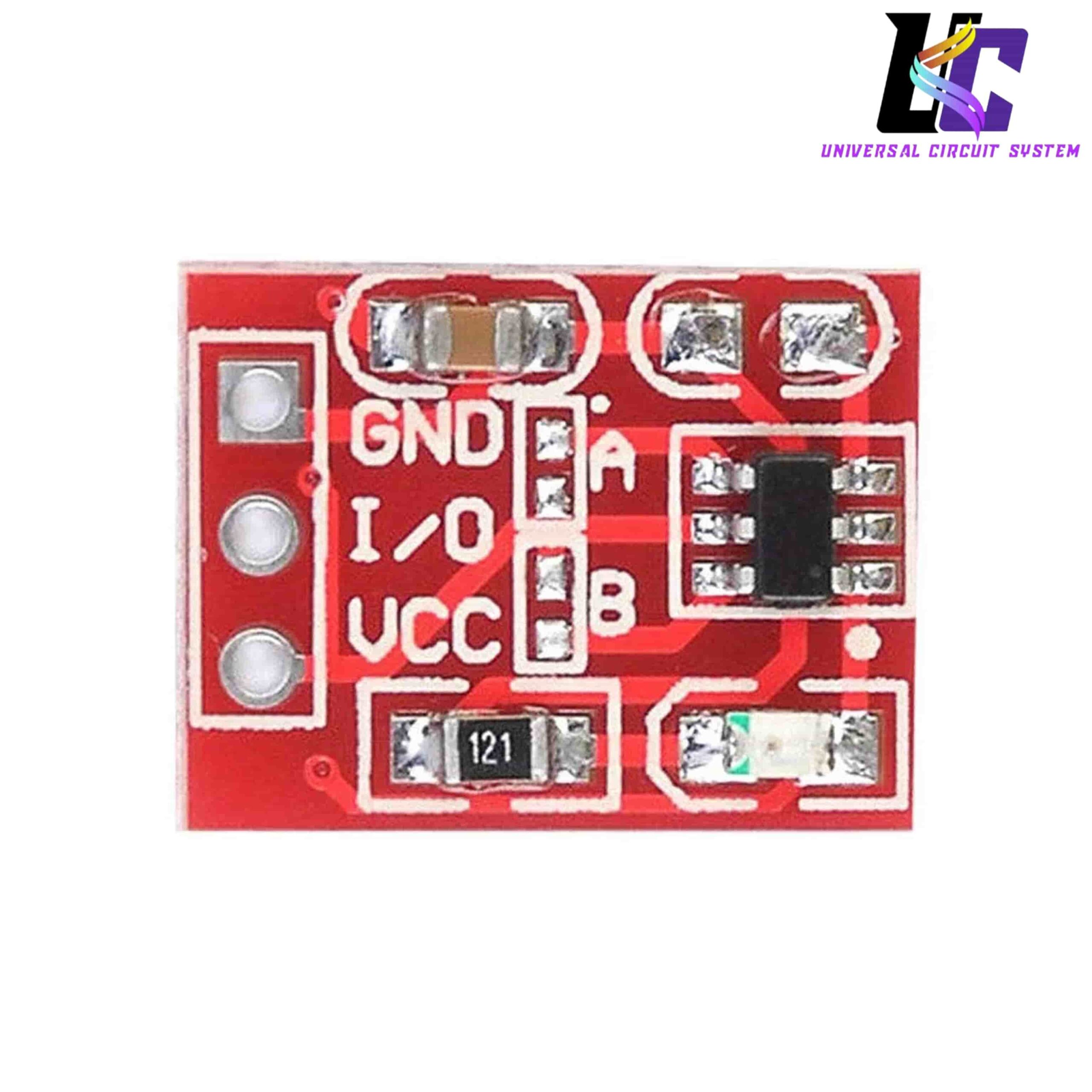
This TTP223 Capacitive Touch Sensor Module is an ultra-compact, low-power digital switch designed to replace traditional mechanical tactile buttons [Image 1, Image 3]. Operating within a 2V to 5.5V range, it features a simple 3-pin interface (VCC, GND, and I/O output) for seamless integration with microcontrollers like Arduino and Raspberry Pi [Image 1, Image 2]. The board features onboard configuration pads (“A” and “B”) that allow users to customize the output behavior between active-high/active-low or toggle/momentary modes, making it ideal for sleek smart home panels, interactive DIY projects, and hidden switch applications.
The TTP223 Capacitive Touch Sensor Module is an ultra-compact, solid-state digital switch designed to replace traditional, wear-prone mechanical buttons with sleek proximity-sensing technology [Image 1, Image 3]. Powered by the highly responsive TTP223 touch detector IC, this module senses changes in electrical capacitance whenever a finger approaches the circular “TOUCH” target area. It can easily detect touch through thin layers of non-metallic materials like glass, plastic, acrylic, or wood, allowing developers to conceal the hardware completely inside enclosed product casings to build seamless, waterproof, and dust-resistant user control panels.
Operating smoothly on a flexible wide-voltage range of 2.0V to 5.5V DC, the board consumes negligible current during idle standby, making it an excellent candidate for battery-operated devices and low-power IoT applications. The interface is optimized for rapid hardware prototyping, featuring three clearly labeled breakout pins: VCC (Power), GND (Ground), and I/O (Digital Signal Output) [Image 2]. When a touch event is registered, the module transmits a clean, debounce-free digital high or low signal directly to a microcontroller pin, or it can be wired directly to drive a small low-current transistor or logic circuit. An onboard surface-mount LED provides instant visual feedback by illuminating upon tactile contact.
Programmable Output Configuration (Solder Pads A & B)
The defining feature of this miniature module is its integrated solder jumper customization array located on the reverse side. By shorting or leaving open the specialized “A” and “B” jumper pads, you can instantly alter the native firmware logic behavior of the output pin without altering a single line of microcontroller code:
- Pad A (Output Level Control):
- Open (Default): Output pin goes Active-High upon touch.
- Shortened (Soldered): Output pin goes Active-Low upon touch.
- Pad B (Output Mode Control):
- Open (Default): Momentary Mode. The pin stays triggered only while a finger remains over the surface.
- Shortened (Soldered): Toggle / Latching Mode (Self-Locking). Tapping the sensor locks the output ON; tapping it a second time flips it back OFF, perfectly mimicking a physical power switch toggle.
Key Technical Specifications
| Feature | Specification |
|---|---|
| Integrated Circuit | TTP223 Touch Pad Detector IC [Image 3] |
| Operating Voltage | DC 2.0V to 5.5V (Standard 3.3V / 5V Logic Compatible) |
| Standby Current Consumption | ~1.5µA up to 3.0µA (At 3V Input) |
| Response Time | ~60ms in Fast Mode / ~220ms in Low-Power Mode |
| Output Current Drive | ≤ 4mA (Source) / ≤ 8mA (Sink) |
| Physical Dimensions | Ultra-miniature footprint: 15mm x 11mm |
| Visual Indicators | Onboard Surface Mount Red Status LED |
Common System Applications
- Smart Home Automation & IoT: Designing hidden walls switches behind drywall or wooden headboards, sleek smart-mirror toggles, and customized touch-activated ambient LED light controllers [Image 1].
- Industrial & Public Interfaces: Developing touch panels for rugged machinery or vandal-resistant ticketing kiosks where physical buttons would suffer mechanical failure from dust and heavy usage.
- Interactive Art & STEM Education: Crafting creative educational tools, tactile museum exhibits, and interactive soundboards driven by microcontrollers like Arduino, ESP32, and Raspberry Pi [Image 1].
- Consumer Electronics Customization: Upgrading vintage appliances, PC enclosures, or desktop gadgets by swapping out sticky, mechanical push-buttons with flush capacitive triggers.





Reviews
There are no reviews yet.